

Agents and skills
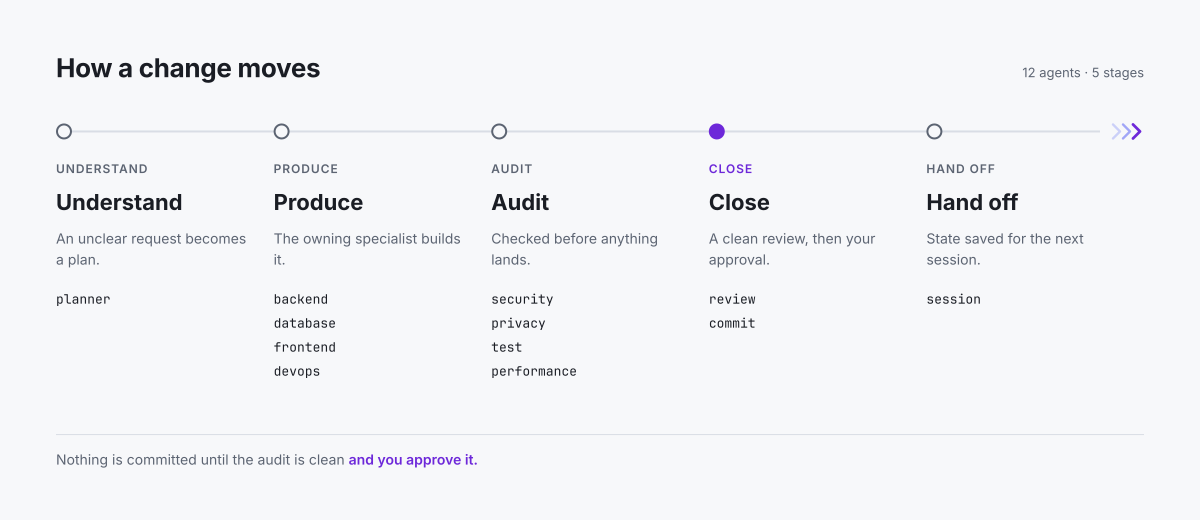
12 specialist agents across five stages, so quality escalates before anything is committed.
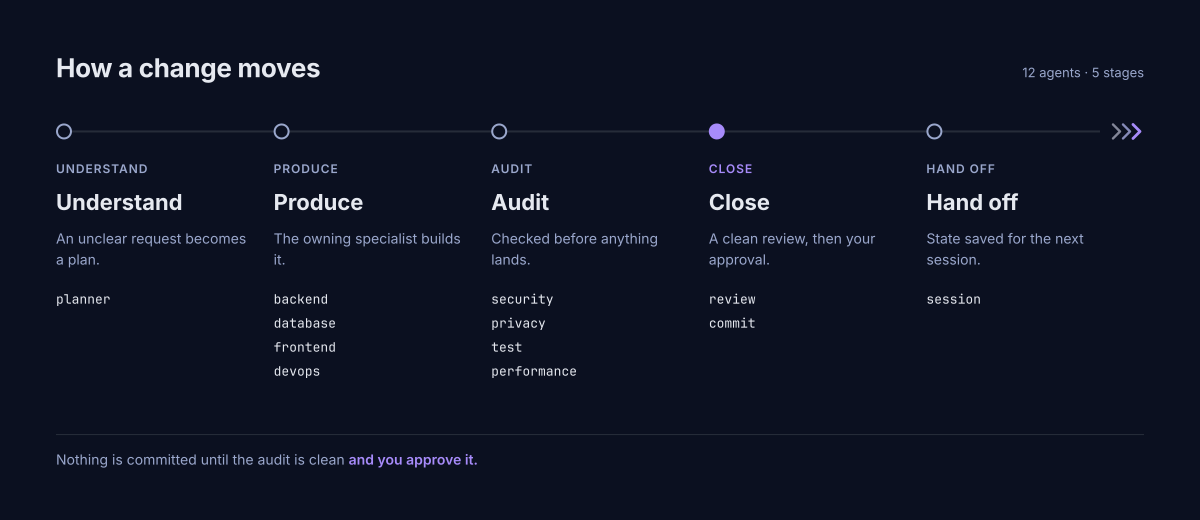
| Agent | Stage | Fires when |
|---|---|---|
crew-planner |
Understand | scope is ambiguous |
crew-backend-expert |
Produce | server / API / business logic |
crew-database-expert |
Produce | schema, migration, index, cache |
crew-frontend-expert |
Produce | UI, component, client work |
crew-devops-expert |
Produce | deployment, CI pipeline, incident |
crew-security-expert |
Audit | auth / IDOR / injection / secret · mandatory if security-critical |
crew-privacy-agent |
Audit | personal data — KVKK/GDPR, plus any regime the project declares |
crew-test-expert |
Audit | tests, coverage, regression |
crew-performance-expert |
Audit | hot path, query/loop, render, payload |
crew-review-agent |
Close | pre-commit code-health review |
crew-commit-agent |
Close | proposes the commit, waits for approval |
crew-session-manager |
Hand off | context fills / phase boundary |
Models are not pinned. Every agent runs on the model you chose for the session, so a review that clears a change is never weaker than whatever wrote it. Two exceptions earn their keep: crew-security-expert buys extra rigour with effort: high, and crew-commit-agent runs on haiku because turning a staged diff into a Conventional Commit is mechanical. Change any of it in the agent’s frontmatter if your project wants something else.
All 39 skills
Section titled “All 39 skills”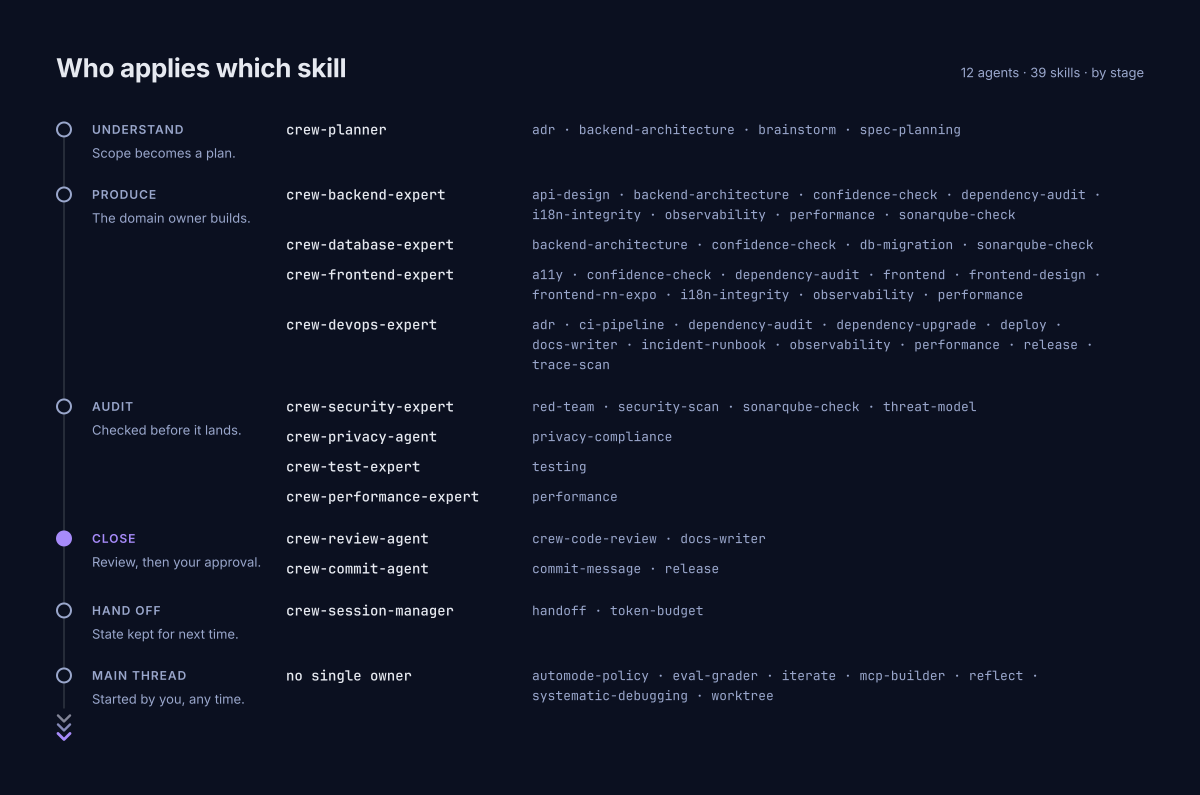
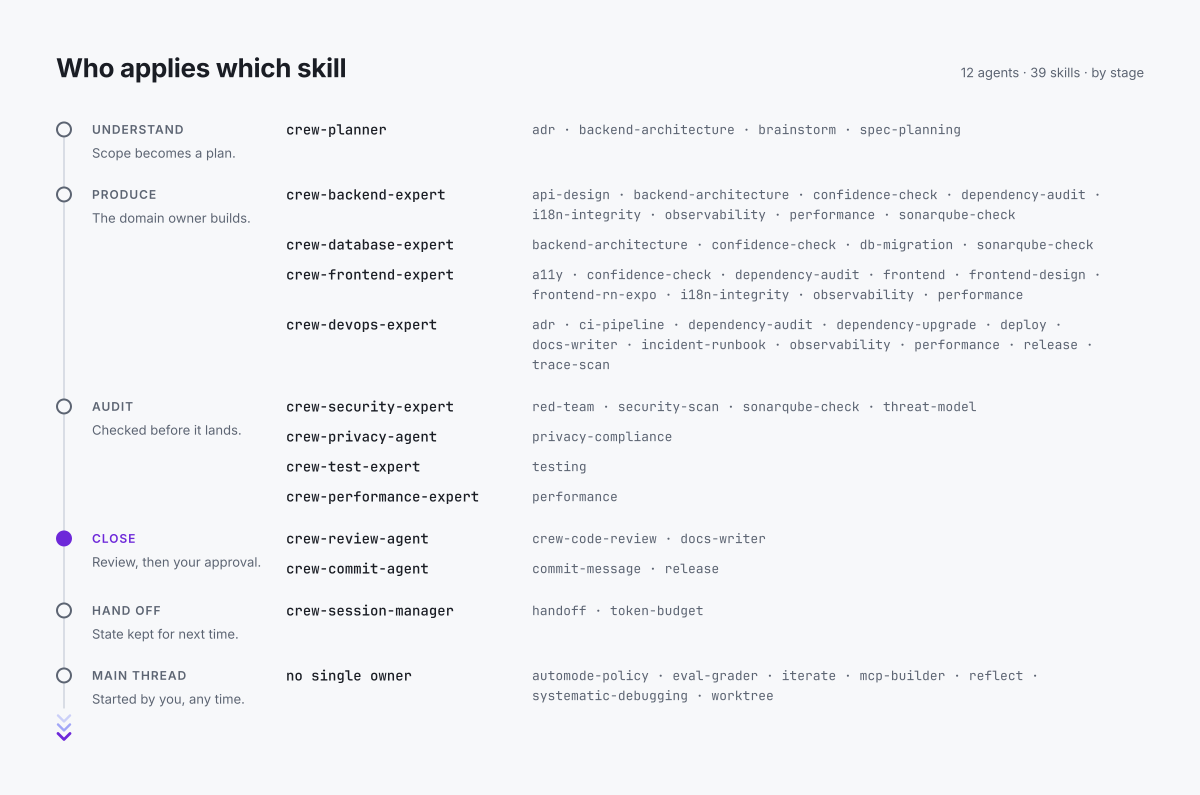
The catalogue below is generated from each skill when the site is built; do not edit it by hand.
| Skill | What it does |
|---|---|
a11y |
Frontend accessibility audit (WCAG): semantic HTML, keyboard access, focus management, contrast, ARIA, screen readers. |
adr |
Architecture Decision Record: context-decision-consequences, for decisions that are expensive to reverse. |
api-design |
API contract design: resource naming, error model, versioning, pagination, backward compatibility, OpenAPI. |
automode-policy |
Auto-mode classifier config: inspect what the classifier that answers permission prompts is configured with, and catch the silent case where a custom autoMode block drops the built-in block rules. |
backend-architecture |
Decide, record and apply the backend stack and architecture pattern. |
brainstorm |
Divergent discovery BEFORE planning: turn a fuzzy ask into 2–4 scoped options + named unknowns, pick a direction, hand to spec-planning. |
ci-pipeline |
CI pipeline discipline: lint→build→test→quality→security, fail-fast, deterministic build, secret handling, PR gates. |
commit-message |
Conventional Commits: reads the staged diff and proposes type(scope): summary, with body/footer when needed. |
confidence-check |
Readiness gate BEFORE writing implementation code: does this already exist, does it fit the project’s architecture, is the API claim actually checked, is there a working reference, is the root cause known. |
crew-code-review |
Code review discipline: review only what changed, rank each finding by severity and category, and fact-check it first. |
db-migration |
Apply schema migrations safely: detect the tool, classify the change by risk, gate destructive ones behind approval, back up in prod, preview-apply-verify, roll back on failure. |
dependency-audit |
Dependency risk assessment, read-only: known CVEs, deprecated packages, licence compliance, maintenance status, lockfile integrity, and a justification for every new dependency. |
dependency-upgrade |
Bring dependencies current without breaking the build: find what is vulnerable, deprecated or behind, classify each target version by risk, apply what is safe, verify, and roll back what is not. |
deploy |
Ship a build reversibly — to a host you manage or a platform that manages it. |
docs-writer |
Keeps documentation in sync with the code: README, usage and related docs when a public API or behavior changes. |
eval-grader |
Measure output quality, don’t vibe it: score a generative task with a two-layer grader — deterministic code metrics + per-dimension LLM-as-judge — over a fixed task set, as signed deltas vs a pinned baseline. |
frontend |
Stack-agnostic frontend discipline (web · mobile · desktop): component structure, state, data fetching, loading/empty/error states, i18n, accessibility, performance. |
frontend-design |
Visual and UX design quality for interfaces: hierarchy, spacing rhythm, typographic scale, a restrained color system, layout composition, and polished states. |
frontend-rn-expo |
OPTIONAL, stack-specific: React Native + Expo (prebuild). |
handoff |
Session handover: when context fills, a phase closes, or the topic changes, write an action-oriented handover to docs/SESSION_STATE.md, then recommend /clear. |
i18n-integrity |
Translation integrity: every key present in every language, no hardcoded strings, consistent placeholders and plurals. |
incident-runbook |
Production incident response: diagnose → mitigate → resolve, then a blameless postmortem and a repeatable runbook. |
iterate |
Refine-to-Done loop: repeat until tests green + review clean + nothing deferred; bounded. |
mcp-builder |
Build a Model Context Protocol (MCP) server so an AI client can call your tools/resources: design tool schemas, pick a transport, handle errors, and test it. |
observability |
Stack-agnostic observability: structured logs, correlation ids, metrics and traces; no PII or secrets in logs. |
performance |
Stack-agnostic performance: measure first, find the bottleneck, then optimise. |
privacy-compliance |
KVKK/GDPR audit method: data inventory, purpose/basis/retention, minimisation, consent, transparency, data-subject rights, cross-border transfer. |
red-team |
Attacker’s-eye test of LLM/agent defenses: instruction hijacking, data exfiltration and tool abuse through untrusted content; verifies whether the defense actually holds. |
reflect |
Retrospective self-audit after nontrivial work: unverified assumptions, skipped items, is-this-the-right- approach — findings, not code. |
release |
Versioning and CHANGELOG: SemVer mapped from Conventional Commits, Keep a Changelog format, tagging, pre-release gates. |
security-scan |
Stack-agnostic security audit: map the attack surface, trace untrusted input to dangerous calls, surface dependency and configuration flaws. |
sonarqube-check |
SonarQube quality gate, any language, no company server needed: run SonarQube Community Build locally (Docker), read the real gate + issues, fix by rule id, re-scan and diff. |
spec-planning |
Spec-first planning: task breakdown, measurable acceptance criteria, dependency order, risk priority. |
systematic-debugging |
Root-cause a bug before touching a fix: reproduce, isolate, form and test a hypothesis, confirm the cause, then fix and verify. |
testing |
The how of testing: pyramid, AAA, isolation, risk coverage, determinism. |
threat-model |
Scope a security audit BEFORE scanning, to cut false positives: map assets, entry points, trust boundaries and 5-8 domain-specific attack classes into a parseable THREAT_MODEL.md. |
token-budget |
Context/token discipline: subagent isolation, output = summary, move-to-file, delegation threshold, lean skills. |
trace-scan |
Trace scan (§4.1/§4.2): before a commit, scans the staged changes and the message for AI traces (co-author trailers, footers, robot emoji, tool names) and vendor template names. |
worktree |
Isolate risky or parallel file-mutating work in a git worktree so the main tree’s uncommitted changes are never clobbered. |